Understanding Mexico’s customs valuation rules is essential for anyone involved in importing goods into Mexico. We will explore the key concepts of ad valorem and transaction value to help navigate the regulations effectively. This knowledge ensures compliance and accurate duty payments under Mexican law.
- The primary basis for customs valuation in Mexico is the transaction value, meaning the price actually paid or payable for the imported goods.
- Mexico follows the World Trade Organization (WTO) Customs Valuation Agreement, applying a hierarchical system of six methods for determining customs value.
- Ad valorem duties are calculated as a fixed percentage of the customs value and serve as the foundation for other taxes and fees like VAT (IVA) and import tariffs (IGI).
- Importers must submit an electronic Value Manifest (Manifestación de Valor Electrónica, MVE) before goods enter Mexico via the VUCEM platform to guarantee transparency and compliance.
- Adjustable charges such as international freight, insurance, and assists can increase the transaction value, impacting the final customs valuation.
- Secondary valuation methods come into play when the transaction value cannot be used, including values of identical or similar merchandise and reconstructed value.
- Recent updates to the Ley Aduanera reflect reforms as of November 2025, emphasizing strict adherence to valuation methods and timely declarations.
What Is the Transaction Value in Mexico’s Customs Valuation?
Definition and Importance
We consider the transaction value as the actual price paid or payable for the goods when sold for export to Mexico. This value forms the cornerstone of customs valuation according to Article 64 of the Ley Aduanera. In most cases, it is the easiest and most transparent way to determine customs duties.
Adjustments and Additions
However, the transaction value can be adjusted. We must include payments for assists (materials, components, or tools provided free or at reduced cost by the buyer), royalties, license fees, and transportation or insurance costs up to the Mexican border. Article 65 of the Ley Aduanera explicitly governs these increasable charges, ensuring the customs base reflects the true economic value.
How Does the Ad Valorem Duty Affect Import Costs?
Calculation of Ad Valorem Duties
Ad valorem duties are expressed as a fixed percentage of the customs value. This method ensures imports are taxed proportionally based on their assessed value rather than fixed tariffs. We find these duties clearly defined in Mexico’s tariff schedules and applied consistently across categories.
The Role of Ad Valorem in Tax Integration
The customs value under ad valorem duty calculation serves as the taxable base for several other taxes, such as the Impuesto General de Importación (IGI), Impuesto al Valor Agregado (IVA), and any applicable antidumping or countervailing duties. This tiered tax setup encourages accuracy and uniformity in declaring values.
What Are the Secondary Methods for Customs Valuation in Mexico?
When Transaction Value Is Not Applicable
In some cases, the direct transaction value cannot be applied—for example, when the goods were not sold for export or when the information is insufficient or unreliable. In such scenarios, we refer to secondary valuation methods as outlined in the Ley Aduanera and WTO guidelines.
The Hierarchy of Secondary Methods
- Transaction value of identical merchandise
- Transaction value of similar merchandise
- Unit price method based on the exporter’s sales
- Reconstructed value considering the cost of production plus profit and taxes
- Fallback or reasonable means consistent with legal principles and commercial practices
This structured approach ensures valuation integrity and legal compliance.
What Are the Compliance Requirements for Declaring Customs Value?
Electronic Value Manifest Submission
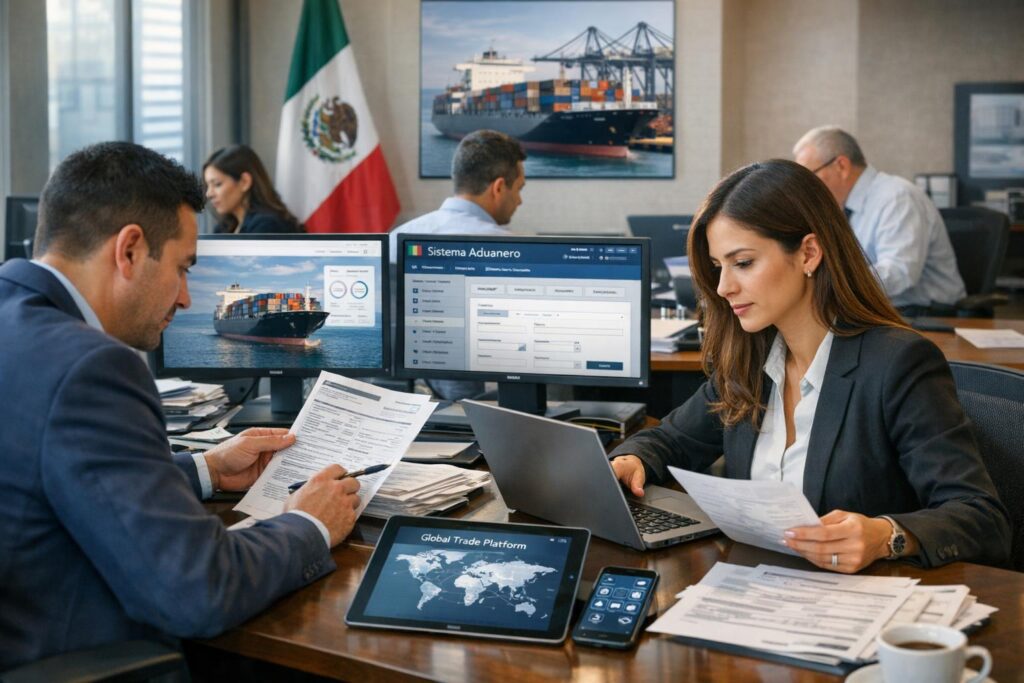
We are required to submit the Manifestación de Valor Electrónica (MVE) through Mexico’s VUCEM platform before goods arrive. It declares the customs value, Incoterms used, payment terms, contracts, and supporting documents. This process prevents undervaluation and customs fraud.
Maintaining Detailed Documentation
Proper records are crucial. We must keep invoices, contracts, freight and insurance receipts, and correspondence that support the declared customs value. Mexican customs audits rely heavily on this documentation to verify compliance.
How Do Recent Reforms Impact Customs Valuation?
Latest Legislative Updates
The Ley Aduanera was last amended in November 2025, reinforcing clear guidance on valuation methods and the need for full transparency in the customs declaration process. These reforms aim at tightening customs enforcement and promoting trade facilitation simultaneously.
Practical Effects for Importers
From our perspective, these reforms heighten the importance of accurate value declaration and proactive communication with customs brokers and authorities. Engaging competent partners like BrokerMX helps us navigate these complexities effectively and avoid costly delays or penalties.
Expert Insight on Mexico’s Customs Valuation
As a customs expert recently noted, “The transaction value method aligns with modern trade practices by reflecting the true economic value of imported goods, fostering fair trade and compliance.” This reinforces the significance of using transparent, verifiable pricing in customs valuation.
Additional Considerations for Importers
Understanding IGI and IVA Relationships
The customs valuation directly affects the base used for the General Import Tax (IGI) and the Value Added Tax (IVA). Misstatements in value can lead to incorrect tax calculations. We always ensure accuracy to avoid audits and financial adjustments.
The Role of Customs Brokers
Working with professionals proficient in Mexican customs regulations is invaluable. For example, BrokerMX offers support in compliance verification, valuation calculations, and submitting the necessary documentation correctly. Their expertise streamlines the import process significantly.
For those interested, learning about BrokerMX’s approach to ensuring compliance provides practical insights into operational efficiencies.
Frequently Asked Questions About Mexico’s Customs Valuation
- What determines the customs value of imported goods in Mexico?
The customs value is primarily determined by the transaction value, which is the price actually paid or payable for the goods when sold for export to Mexico. - What additional costs must be included in the transaction value?
Costs such as assists, royalties, license fees, international freight, and insurance up to the border of Mexico are added to the transaction value. - What happens if the transaction value cannot be used?
Mexico applies a hierarchical system of secondary methods, such as prices of identical or similar merchandise, unit price methods, reconstructed value, or fallback methods. - How does the ad valorem duty work in Mexico?
Ad valorem duty is calculated as a percentage of the customs value and forms the basis for other taxes like IGI and IVA. - What documentation is required to support customs valuation?
Importers must keep detailed records, including contracts, invoices, freight and insurance receipts, and submit a Manifestación de Valor Electrónica (MVE) via VUCEM.
Conclusion
We believe comprehending Mexico’s customs valuation rules is vital for any importer to ensure accurate duty payments and legal compliance. The transaction value, bolstered by transparent documentation and the proper use of secondary methods when necessary, streamlines cross-border trade. Staying updated with reforms in the Ley Aduanera and leveraging expert support like the one offered at BrokerMX helps us avoid pitfalls and optimize our import operations across Mexico.
Our shared experience confirms that accurate customs valuation is not only a regulatory requirement but a competitive advantage in today’s complex trade environment.