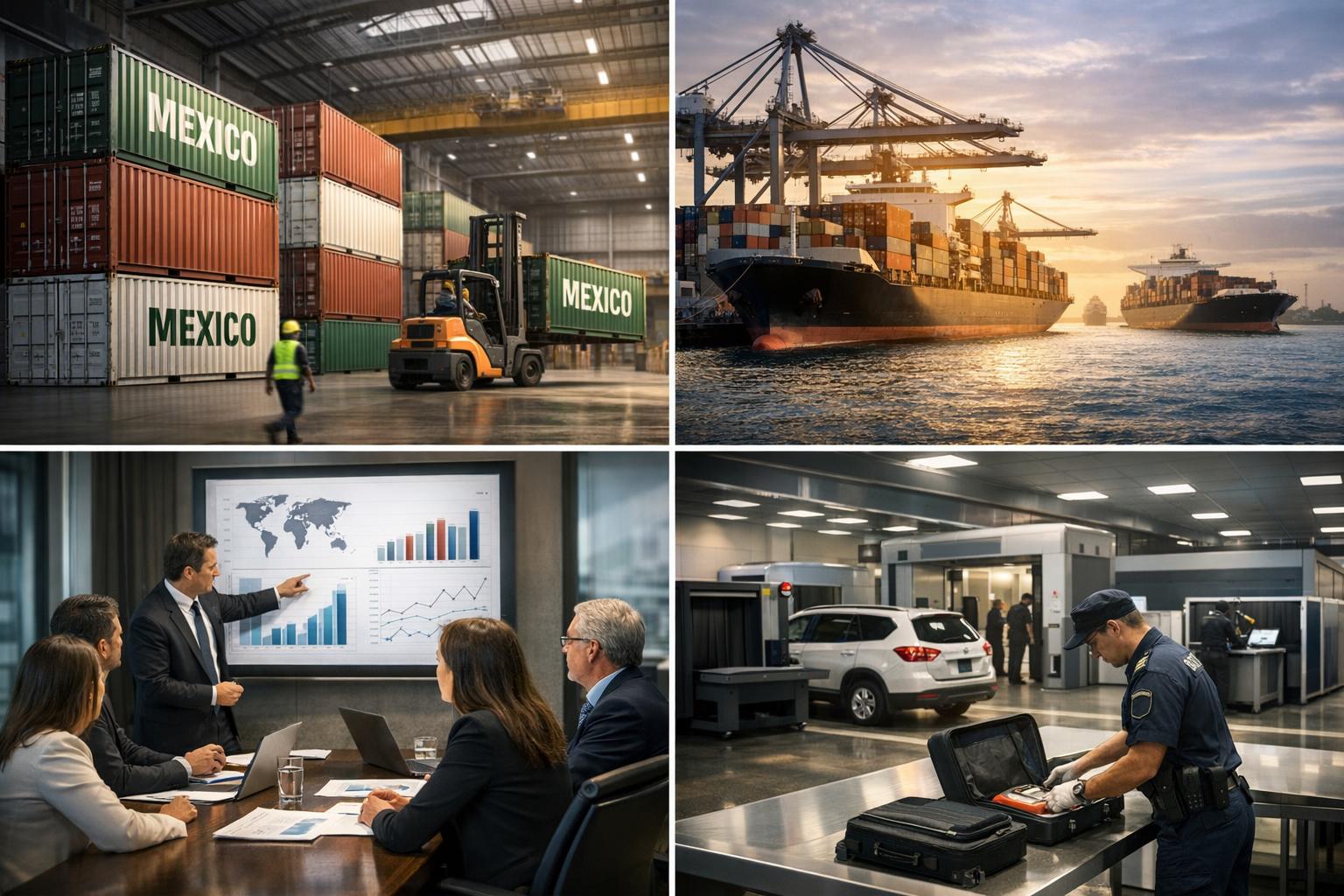
We understand how global trade policies profoundly impact Mexican imports, shaping our economy and trade dynamics. In this article, we dissect the latest developments and provide insight into how these rules affect our import strategies on a national level.
Global trade policies continuously reshape our import landscape. By analyzing recent tariff adjustments and trade reforms, we gain clarity on Mexico’s evolving trade position. This helps us make informed decisions for maintaining competitiveness and fostering growth.
- Mexico implemented new tariffs on over 1,400 products, targeting countries without trade agreements.
- Trade policy reforms since the mid-1980s have boosted imports more than exports, influencing trade balances.
- The USMCA plays a crucial role in tariff exemptions, with over 80% of exports being USMCA-certified by mid-2025.
- Mexico recently achieved a historic trade surplus with the United States despite tariff challenges.
- Sector-specific tariffs, including those from the IEEPA and others, impact various industries such as aluminum and automotive parts.
- Unilateral trade reforms and partner agreements together could enhance Mexican imports by approximately $16.5 billion annually.
Understanding Mexico’s Recent Tariff Reforms and Their Impact
Scope of Tariff Changes
This year, Mexico expanded import tariffs to 1,463 tariff lines, affecting countries like China, Russia, India, and Brazil—nations without preferred trade agreements with us. These tariffs range from 5% to 35% and primarily target strategic manufacturing sectors.
Such tariff reforms aim to protect domestic industries and encourage local production. For instance, the aluminum sector has new import regulations requiring Automatic Import Notices covering various products like unwrought aluminum and profiles.
Effect on Importers
We have noticed that these additional tariffs increase costs on many imported goods, especially non-USMCA compliant products. The threat of tariffs up to 30% if the U.S. and Mexico fail to reach agreements further complicates logistics and pricing strategies for importers.
Despite tariffs, Mexico’s exports have grown, and trade surpluses with the U.S. have been consistently rising. As a trade expert from the Baker Institute noted, “Tariff policies and trade uncertainty have redefined economic interactions but have also underscored the resilience of Mexico’s trade relations.” This resilience shows our ability to adapt to global trade shifts.
The Role of USMCA in Shaping Mexican Imports
USMCA Certification Benefits
USMCA compliance is crucial for avoiding tariffs. By mid-2025, over 80% of Mexican exports were USMCA certified, facilitating duty-free trade with the U.S. Understanding and leveraging these certifications allows us to optimize imports and exports while minimizing tariffs.
For businesses importing into Mexico, being USMCA compliant helps reduce costs and streamline customs procedures. We encourage examining product origin rules to qualify imports for these benefits.
Challenges with Non-Compliant Products
Products falling outside USMCA compliance face steep tariffs. Agricultural imports, for example, may hit high tariff-rate quotas after duty-free limits expire. This scenario underlines the importance of regulatory compliance for importers focusing on cost efficiency and reliable supply chains.
Sector-Specific Tariffs and Their Effects on Mexican Industries
Manufacturing and Automotive Parts
Sector-specific tariffs significantly impact strategic manufacturing sectors, including automotive parts. Mexico has introduced reforms impacting over 185 HS product codes with tariffs from 5% to 35%, aimed at boosting domestic production capacity.
For detailed guidance, our article How to Import Automotive Parts into Mexico outlines best practices to navigate these changes effectively.
Aluminum and Electronics Imports
New requirements for aluminum imports demand adherence to regulations like Automatic Import Notices. Simultaneously, electronics imports require thorough compliance understanding to mitigate tariff exposure.
Exploring our comprehensive guide, Importing Electronics into Mexico: A Comprehensive Guide, can help businesses handle these sector challenges.
Trade Policy Uncertainty and Its Economic Implications
Trade Reforms Since the 1980s
Trade liberalization beginning in the mid-1980s significantly influenced Mexico’s trade growth, particularly imports exceeding exports, which affected balance of payments and growth.
However, the effects of NAFTA initially proved negligible; the introduction of USMCA has since changed this dynamic by fostering tighter North American integration.
Monetary Policy and Inflation Pressures
Economic stagnation and inflation above 4% constrain monetary easing, despite Banxico’s 300 basis points rate cut in 2025. Such macroeconomic conditions impact trade volumes and import strategies, demanding agility from businesses navigating this landscape.
Maximizing Opportunities Through Free Trade Agreements
Leveraging Bilateral and Multilateral Agreements
Mexico’s numerous free trade agreements (FTAs) have eliminated tariffs on approximately 65% of imports, enhancing trade flexibility and reducing costs. We believe leveraging these FTAs is key to sustaining competitive advantage.
For more insights, see our detailed post on Leveraging Free Trade Agreements for Cost-Effective Imports.
Nearshoring Trends and Future Outlook
The global push for nearshoring has boosted Mexico’s importance as a strategic import and export hub. Companies evaluating duty exposure and product origin rules increasingly recognize Mexico’s advantage in receiving cost-effective, tariff-efficient imports.
In this context, careful analysis of tariff exposure, particularly Section 301 tariffs from China, is critical to optimizing supply chains.
Mexico’s Trade Performance in International Markets
Historic Trade Surpluses with Key Partners
Recent data shows Mexico achieving a record trade surplus with the U.S., up 20% from 2024 levels, despite tariff measures. Total exports reached US$69.5 billion in May 2026, fueled by robust growth across non-oil and oil sectors.
Import Statistics and Strategic Sectors
Mexico ranks as a top importer in products like corrugated paper, aluminum pipes, and zinc bars. These imports are essential for national manufacturing and infrastructure development, highlighting the broad impact of trade policies.
| Product | 2025 Import Value (USD millions) |
| Corrugated Paper | 361 |
| Aluminium Pipes | 283 |
| Carbon Paper | 50.8 |
FAQs About the Impact of Global Trade Policies on Mexican Imports
- Q: How do new tariffs affect my imported goods into Mexico?
A: Newly implemented tariffs, especially on products from countries without FTAs, raise import costs and may require strategic adjustments in sourcing and pricing. - Q: What benefits does USMCA certification provide?
A: USMCA certification exempts goods from tariffs within North America, enhancing trade efficiency and cost-effectiveness. - Q: Are sector-specific tariffs permanent?
A: Tariff measures may be temporary or adjusted periodically as trade negotiations and economic policies evolve. - Q: How can I leverage Mexico’s free trade agreements?
A: Understanding the scope of FTAs can help you identify duty exemptions and streamline import procedures, lowering costs. - Q: Is Mexico’s import growth sustainable amid global policy shifts?
A: While challenges remain, recent surpluses and reforms indicate strong resilience and adaptability in our trade ecosystem.
In conclusion, we believe that staying informed and proactive in adapting to global trade policies is essential for navigating Mexico’s import environment. By leveraging trade agreements and understanding sector-specific regulations, we can optimize costs and maintain competitiveness. As a resource, we recommend visiting brokerMX for expert guidance on import procedures and compliance.
Being aware of ongoing tariff changes and policy shifts empowers us to make smarter import decisions, ultimately supporting Mexico’s economic growth and trade success.