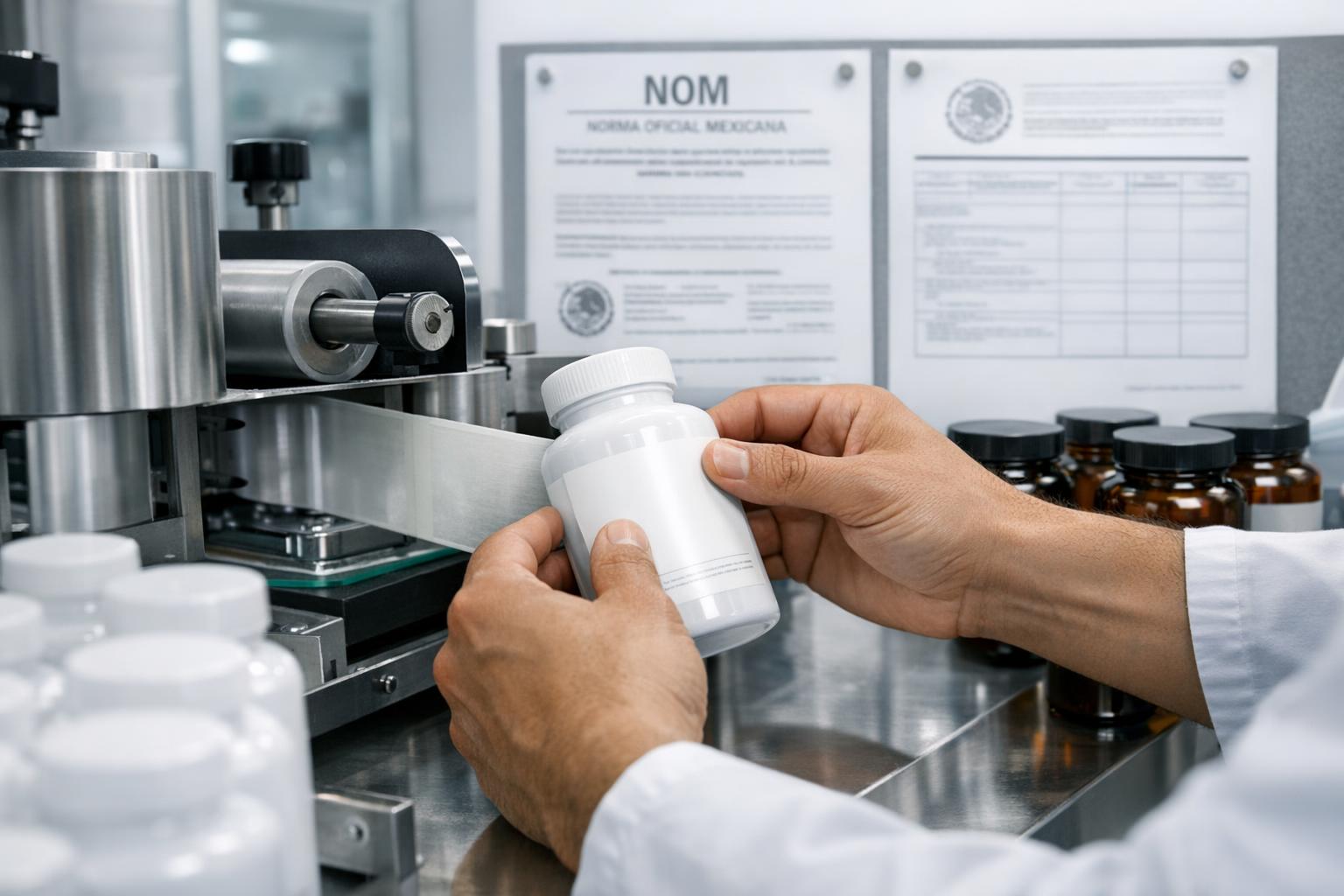
Importing supplements and health products requires a thorough understanding of Mexico’s labeling and safety standards. We navigate these regulations carefully to ensure compliance and smooth entry of our goods into the market.
Before diving deeper, let’s provide an overview of the essential aspects involved in this process.
- All supplements require a Permiso Sanitario Previo de Importación (PSPI) issued by COFEPRIS.
- Labels must be entirely in Spanish and include specific information such as the product name, ingredient list, and nutritional facts.
- Compliance with the Official Mexican Standards (NOMs) is mandatory for hygiene practices, labeling, and product safety.
- Health import permits are necessary unless for personal, donation, experimental, or treatment use.
- COFEPRIS reviews the product’s ingredients and labeling before granting approval.
- Bringing medicines or supplements for personal use is allowed but requires official prescriptions or documentation.
- Failure to comply with labeling or import permits can result in delays, fines, or rejection at customs.
Understanding COFEPRIS Requirements for Supplement Imports
Health Import Permits and Authorizations
We recognize that obtaining a Permiso Sanitario Previo de Importación (PSPI) from COFEPRIS is a crucial step. This permit validates that the health products meet Mexico’s safety and labeling criteria. Our team ensures that all documentation and product details are submitted correctly to avoid any compliance issues. The permit includes a review of the ingredient list and the overall quality standards of the supplement.
Exceptions and Special Cases
There are exceptions for non-commercial imports such as personal use, donations, experimental use, or treatment. These cases typically do not require an import permit, but must be accompanied by clinical documentation or prescriptions. Being aware of these particularities allows us to streamline import procedures when applicable.
Labeling Standards for Health Products in Mexico
Essential Label Information
Labels on supplements must be in Spanish and include:
- The product’s common name.
- The total quantity or net content (e.g., quantity of tablets or volume in milliliters).
- A Supplement Facts panel detailing active ingredients.
- A complete ingredient list in accordance with NOM requirements.
- Nutritional and allergen information where applicable.
Consistent with the updated labeling guidelines, these elements are designed to protect the consumer and support transparent product information.
Compliance with NOM-251-SSA1-2009 Hygiene Practices
Our import strategy also goes beyond just labeling, ensuring that products adhere to proper manufacturing hygiene standards such as those established by NOM-251-SSA1-2009. This standard mandates good practices during supplement production, safeguarding consumer health and product integrity during processing.
Health and Safety Regulations for Imported Supplements
Legal Framework and Product Safety
The legal framework regulating supplements aims to prevent health risks associated with unregulated products. We work strictly within these guidelines to ensure imported goods meet all safety parameters before reaching the market. COFEPRIS supervises this process to maintain a high level of safety for consumers nationwide.
Inspection and Customs Protocols
Compliance with customs regulations is vital. Mexico requires that all health products undergo inspection upon entry. Labels and documentation are verified against COFEPRIS authorizations. Any inconsistencies lead to delays or rejection. In this context, we closely monitor these protocols and keep updated with procedural changes to avoid operational issues.
How to Navigate Import Licensing and Customs for Health Goods
Steps to Obtain Import Authorizations
Importing health products involves these key procedural steps:
- Compile required documentation including ingredient list, labeling samples, and safety certifications.
- Submit an application for the PSPI through COFEPRIS.
- Await authorization and address any requests for additional information.
- Ensure the product labeling complies with NOM-051 and other applicable standards.
- Arrange for customs clearance with proper documentation and permits.
As one expert in Mexican regulatory affairs noted, “Understanding the dynamic interplay between customs and health regulations is critical to avoid costly delays.” Our approach integrates these considerations for smooth import operations.
Choosing the Right Partners
Leveraging experienced customs brokers and logistics providers who understand these requirements is indispensable. For guidance on logistics and customs clearance, we recommend consulting resources like How to Navigate Mexico’s Import Licensing Requirements to ensure every step meets regulatory expectations.
Common Challenges and How to Overcome Them When Importing Supplements
Language and Labeling Errors
One frequent issue is incorrect or incomplete labeling which can cause shipment rejection. We emphasize thorough review of label content in Spanish and conformity with NOM standards before submission.
Documentation Completeness
Incomplete permits or missing ingredient disclosures often stall imports. We maintain a checklist aligned with COFEPRIS requirements to prevent such setbacks.
Understanding Product Classification
Some products blur the line between food supplements, medicines, or medical devices. Accurate classification is critical, affecting permits needed and customs treatment.
Benefits of Compliance with Mexican Health Product Regulations
Market Access and Consumer Trust
By meeting safety and labeling standards, we facilitate faster clearance and boost consumer confidence. Regulatory compliance is not just mandatory—it reflects our commitment to quality and safety.
Reduced Risk of Sanctions and Delays
Proper licensing and documentation minimize risks of fines, confiscation, or import bans, optimizing supply chain efficiency.
We believe that a proactive approach to regulation ensures sustainable growth and positive brand reputation in Mexico’s competitive market.
Conclusion
In conclusion, importing supplements and health products into Mexico demands meticulous attention to labeling and compliance with safety standards governed by COFEPRIS and Mexican NOMs. We have seen firsthand how aligning with these requirements streamlines customs clearance, mitigates risks, and builds trust with consumers. Engaging carefully with the regulations and leveraging professional guidance—such as information provided on brokermx.com—helps us navigate this complex landscape effectively.
Frequently Asked Questions
What permits are required to import dietary supplements into Mexico?
A Permiso Sanitario Previo de Importación (PSPI) issued by COFEPRIS is generally required, except in cases of personal use, donations, or treatments with proper documentation.
What are the labeling requirements for supplements in Mexico?
Labels must be in Spanish and include the product name, quantity, ingredient list, Supplement Facts panel, and any nutritional information, in compliance with NOM-051 and other applicable NOMs.
Can I import supplements without a health permit if they are for personal use?
Yes, personal use imports do not require a health permit but must be accompanied by medical prescriptions or proof of necessity.
What happens if the imported product fails to meet labeling standards?
Non-compliance can result in shipment detention, fines, or refusal of entry by Mexican customs and COFEPRIS.
Are there specific hygiene regulations for the manufacture of imported supplements?
Yes, manufacturers must comply with NOM-251-SSA1-2009, which specifies good hygiene practices in the production of supplements.
Ready to streamline your supplement imports?
Partner with experts who understand every facet of Mexico’s import regulations. Visit brokermx.com to explore trusted solutions that ensure compliance and efficiency in bringing your health products to market.