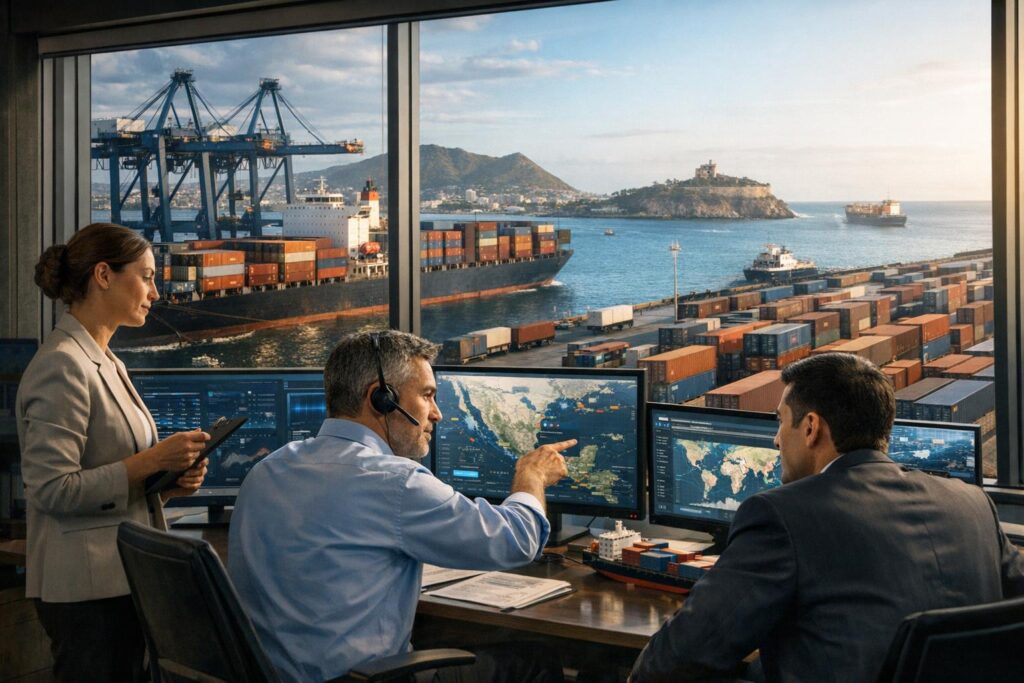
We understand the critical role that freight forwarding services play in Mexico’s dynamic trade environment. As a national market, Mexico experiences robust growth in logistics and shipment management. We navigate these complexities together ensuring efficient and compliant freight forwarding solutions.
- Mexico’s freight forwarding market is expected to grow to USD 8.4 billion by 2032 with a CAGR of 5%
- Sea and inland waterway freight forwarding hold over 70% market share
- Customs regulations and documentation play a vital role in cross-border shipments
- Road freight remains essential, with over 980,000 vehicles facilitating national distribution
- Technological integration and multimodal transport coordination enhance logistics efficiency
- Compliance with Mexican customs rules is mandatory for import/export activities
- The growing market calls for trusted local and international freight forwarding experts
Understanding Mexico’s Freight Forwarding Market Growth
Current Market Size and Projections
Mexico’s freight forwarding market is projected to expand significantly from USD 6 billion in 2025 to USD 8.4 billion by 2032, reflecting a steady CAGR of around 5%. This growth underlines the increasing volume and complexity of goods moving through national and international channels.
Key Freight Forwarding Modes
The dominant mode by volume is sea and inland waterways, accounting for over 72% of shipments, followed by road freight which is crucial for domestic distribution. Air freight shows the highest annual growth rate, emphasizing the importance of speed in certain sectors.
Key Customs Regulations Affecting Freight Forwarding in Mexico
Documentation and Compliance
We ensure all shipments include accurate customs documentation, a must for efficient clearance. Import declarations must be presented 24 hours prior to loading on vessels, according to recent regulatory updates. This process ensures smooth operations minimizing delays.
Official Mexican Standards and Tariff Classifications
Mexican customs rules mandate strict compliance with NOMs (Official Mexican Standards) and precise tariff classifications, affecting valuation and duties. We prioritize keeping up to date with these changes to prevent any import/export disruption.
Advantages of Multimodal Freight Forwarding Services
Coordinated Shipment Consolidation
Combining multiple freight modes reduces costs and transit times. We consistently leverage maritime, rail, air, and road transport to provide the most efficient solution for your cargo based on destination, urgency, and cargo nature.
Customization and Tracking
With technology-enhanced tracking systems, we provide real-time visibility over shipments which enhances supply chain reliability. Customization also allows clients to select optimal routes and service levels tailored to business needs.
How Technological Advances Are Shaping Freight Forwarding in Mexico
Integration of Digital Platforms
Digital platforms and automated processes streamline booking, documentation, and compliance checks. The Mexico freight forwarding industry increasingly adopts such innovations to manage the escalating volume and complexity efficiently.
Data-Driven Decision Making
Data analytics help forecast demand, identify bottlenecks, and optimize routes. Relying on data allows us to anticipate challenges and craft proactive strategies, maximizing shipment speed and minimizing costs.
Road Freight: The Backbone of Mexico’s Internal Logistics
Extensive Vehicle Fleet and Enterprise Structure
Over 980,000 vehicles operate in road freight transport with more than 150,000 enterprises primarily comprising micro and small businesses. This decentralized structure enables flexibility and extensive coverage across the country.
Contribution to National GDP
Federal road freight moves more than 565 million tonnes yearly, contributing approximately 3.8% of the national GDP. Our operations align with this vital transportation network ensuring reliable last-mile delivery and regional distribution.
Essential Services Offered by Freight Forwarders in Mexico
Cargo Booking and Shipment Consolidation
We handle international cargo booking, consolidating smaller shipments to optimize costs. This is crucial for businesses shipping diverse products across multiple markets.
Customs Brokerage and Documentation
Freight forwarders coordinate closely with customs brokers to fulfill all regulatory requirements. For more information on distinct roles, see our detailed analysis in Roles and Responsibilities of a Freight Forwarder vs Customs Broker.
Multimodal Coordination
We ensure seamless transfers between transport modes, preventing delays and damage. Multimodal logistics reduce overall transit times which aligns with Mexico’s growing trade demands.
Compliance and Regulatory Obligations in Mexican Freight Forwarding
Timely Import and Export Declarations
According to the 2026 General Commerce Rules, we ensure import declarations are presented at least 24 hours before loading, streamlining vessel boarding and customs clearance.
Licensing and Tariff Management
Maintaining updated licenses and tariff classifications necessitates expert knowledge. We support clients through every regulatory step for smooth cross-border movement. Learn more about import licensing on How to Navigate Mexico’s Import Licensing Requirements.
Compliance with Official Mexican Standards (NOMs)
Ensuring products meet NOM requirements prevents rejections and costly delays. As an industry expert once stated, “Proactive compliance avoids operational bottlenecks and protects business reputations in international trade.” We uphold these standards rigorously.
Strategies to Optimize Freight Forwarding Costs
Shipment Consolidation and Route Optimization
Combining shipments reduces unit transport costs. Optimizing routes using data analytics allows us to select efficient and cost-effective transportation methods.
Leveraging Technology and Partnerships
Modern freight management software provides transparency improving decision-making while well-established partnerships in logistics networks help negotiate favorable tariffs.
| Cost-Saving Measures | Benefits |
| Shipment Consolidation | Reduced per-unit shipping cost |
| Multimodal Shipping | Lower transit times and expenses |
| Customs Expertise | Minimized delays and fines |
| Technological Tracking | Improved supply chain visibility |
Conclusion
We believe that navigating Mexico’s freight forwarding sector requires a deep understanding of regulatory environments, market dynamics, and technological advances. Together, we can maximize logistics efficiency and compliance while reducing costs to enhance competitiveness. For specialized guidance, we recommend exploring resources available at brokermx.com, a trusted partner in Mexican trade logistics.
FAQ
What are the main modes of freight forwarding in Mexico?
Sea and inland waterways dominate, followed by road and air freight, with each mode serving distinct operational needs.
How far in advance must import declarations be submitted?
Import declarations should be filed at least 24 hours before the cargo is loaded onto the vessel, according to 2026 regulations.
What role do Official Mexican Standards (NOMs) play in freight forwarding?
NOMs regulate product compliance for imports and exports, ensuring safety and quality standards are met.
How can technology improve freight forwarding services?
Technology enables shipment tracking, route optimization, and data analytics, resulting in faster and more cost-efficient logistics.
What distinguishes a freight forwarder from a customs broker?
Freight forwarders manage shipment logistics, while customs brokers specialize in clearing goods through customs compliance.
Get Started with Expert Freight Forwarding in Mexico
Let us help you streamline your freight forwarding needs with professional service and expert advice. Reach out to us today and experience the difference that well-managed shipment coordination can make for your business.