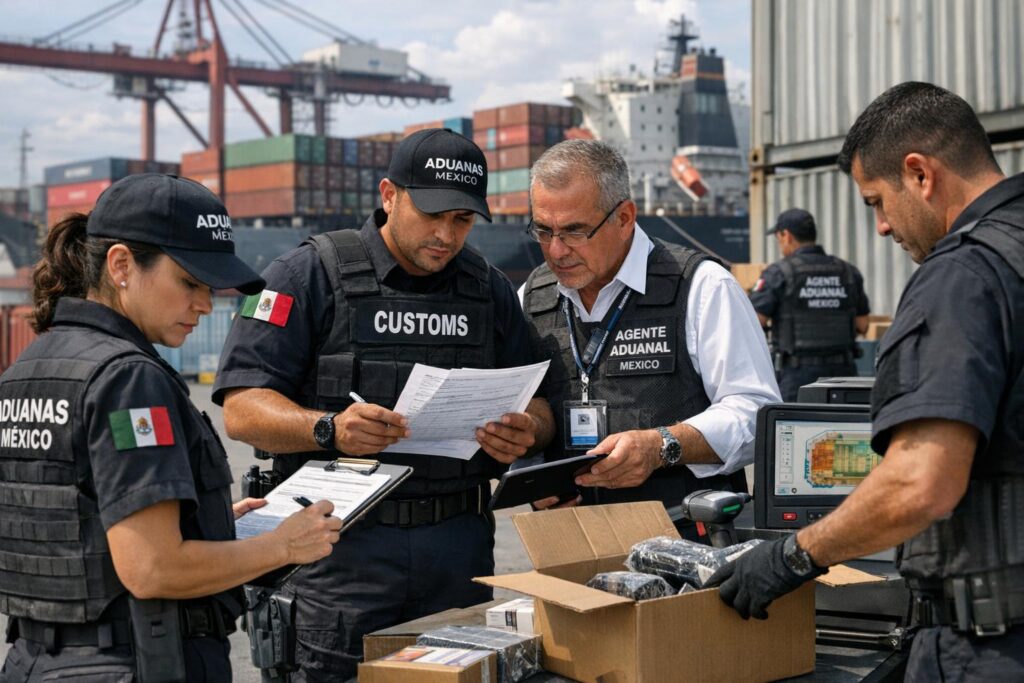
We often find that understanding and complying with Mexico’s import licensing requirements is crucial for businesses engaging in international trade. Navigating these regulations allows us to ensure smooth customs procedures and avoid costly delays or penalties. In this article, we share insights and best practices for handling import licenses efficiently within Mexico.
- Mexico requires prior import permits for specific regulated products.
- Licenses are usually managed through the Ministry of Economy and VUCEM platforms.
- Electronic submissions and updated customs valuation declarations are mandatory.
- Importers must be registered in the Importer Registry (Padrón de Importadores) and provide a valid RFC.
- The Ventanilla Única de Trámites de Comercio Exterior (VUTCE) facilitates centralized processing of import permits.
- Failure to comply with licensing rules can result in penalties or shipment refusal.
- Continuous updates affect procedures, making ongoing compliance essential.
Understanding Mexico’s Import License Categories
Which products require licenses?
We recognize that Mexican import licenses are mandatory for several categories. These include but are not limited to hazardous chemicals, certain pharmaceuticals, firearms, pesticides, and agricultural products like sugar and food preparations. Official Mexican Standards (NOMs) often accompany these licensing requirements.
Regulatory authorities involved
The main entity overseeing licenses is the Secretaría de Economía through its Directorate-General of Foreign Trade. Additionally, agencies such as SEMARNAT for environmental permits and SEDENA for arms control participate depending on the product type. Coordinating among these bodies is key to obtaining accurate and valid permits.
How to Register and Obtain an Import License
Importer registration and prerequisites
Before applying for any license, we must be officially registered as importers in Mexico’s Importer Registry (Padrón de Importadores), maintained by the Secretaría de Hacienda y Crédito Público (SHCP). This involves completing the requirement to possess a Federal Taxpayers Registry (RFC) number.
Only individuals or legal entities established in Mexico can apply. This ensures accountability and compliance with tax and customs obligations.
Applying for the import permit through VUTCE
Since May 2026, the Ventanilla Única de Trámites de Comercio Exterior (VUTCE) centralizes over 130 import and export procedures. We submit the application electronically here, streamlining document delivery and tracking.
The system requires the electronic submission of a Customs Value Declaration (manifestación de valor) to verify transaction data under Rule 1.5.1 of the General Rules for Foreign Trade (GRFT). This process supports transparency and prevents undervaluation.
Managing Electronic Documentation and Compliance
Role of Electronic Value Manifest and Customs Declarations
Mexico mandates submitting an Electronic Value Manifest (Manifestación de Valor Electrónica, MVE) before goods arrive. We transmit the MVE via VUCEM, the federal customs platform, ensuring customs authorities receive verified data to calculate applicable duties.
Certified importers participating in programs like IMMEX and those holding Authorized Economic Operator (OEA) certification benefit from simplified valuation procedures and compliance monitoring.
Declaration of permits in the customs pediment
Starting September 28, 2026, importers must include the import license number in their customs declaration (pedimento) when importing regulated goods such as sugar and food preparations. We advise closely monitoring updates published by SAT and Secretaría de Economía to maintain full compliance.
Common Challenges Importers Face and How to Overcome Them
Delays due to missing or incomplete documentation
We have observed that incomplete applications or failure to submit supporting documentation can cause significant delays. Double-checking all required forms and license numbers before submission through VUTCE helps mitigate this risk.
Understanding sector-specific regulations
Importers must familiarize themselves with sector regulations. For instance, pharmaceutical imports require adherence to health authority authorizations, and beverage alcohol products require registration in the Federal Taxpayers Registry (RFC) and specific import permits.
Working with customs brokers experienced in Mexico’s regulatory landscape can help us navigate these complexities efficiently.
Best Practices for Maintaining Compliance with Import Licensing
Staying updated with regulatory changes
Regulations evolve frequently. We recommend monitoring official sources and subscribing to alerts from the Secretaría de Economía and SAT. The dynamic environment demands continuous learning to avoid violations.
Leveraging technology and expert support
Automating permit management using platforms like VUTCE and utilizing digital tools to track import documentation have improved our operational efficiency. Partnering with service providers, such as customs brokers, further ensures compliance and problem resolution.
As one customs expert noted, “Integrating electronic platforms with comprehensive regulatory knowledge enhances transparency and reduces clearance times significantly, benefiting both importers and authorities.” This synergy reflects the path forward.
Additional resources for specific imports
For specialized imports, consider consulting guides such as our Best Practices for Importing Pharmaceuticals into Mexico or the Guide to Importing Textiles into Mexico which offer detailed insights on licensing and barriers by product category.
Consequences of Non-Compliance with Import Licensing Requirements
Legal and financial penalties
Failure to obtain required licenses can result in seized goods, fines, or legal sanctions. Mexican customs can refuse clearance until all requirements are met. We understand that such scenarios damage both reputation and profitability.
Impact on supply chain and business operations
Delays attributable to licensing gaps disrupt supply chains, causing inventory shortages or contractual issues. Proactively managing regulatory steps helps sustain smooth import flows and customer satisfaction.
Innovations in Mexico’s Customs and Import Licensing Processes
The evolution of VUTCE and VUCEM platforms
Mexico’s government is modernizing customs through the VUTCE system, effective since May 2026, combining over 130 trade-related processes into a single digital portal. This innovation streamlines import licensing and documentation submissions.
Similarly, VUCEM supports electronic customs value declarations, fostering transparency and compliance enforcement.
Importance of digital certifications and the IMMEX program
Importers participating in government programs such as IMMEX and those certified as Authorized Economic Operators (OEA) leverage streamlined customs processing benefits. This status rewards compliance and provides operational efficiencies.
We encourage importers to explore eligibility for these programs to optimize their import activities.
Conclusion
At a national level, navigating Mexico’s import licensing requirements demands a strategic approach combining proper registration, use of modern digital platforms, and close attention to regulatory updates. By following these best practices, we minimize risks, accelerate customs clearance, and enhance trade efficiency.
We recommend businesses consult trusted partners and authoritative resources such as BrokerMX to gain tailored support in handling import licenses and related compliance obligations.
Frequently Asked Questions (FAQ)
- Which products require import licenses in Mexico?
Import licenses are required for regulated items such as chemical precursors, pharmaceuticals, firearms, pesticides, certain foods, and CITES-listed wildlife products. - How do I apply for an import license?
Applications are submitted electronically via the VUTCE platform after registering in the Importer Registry and obtaining a valid RFC. - What happens if I import goods without the required license?
Customs may detain shipments, impose fines, or deny entry until proper documentation is provided. - Can foreign companies apply for import licenses?
Only entities registered in Mexico with an RFC and Importer Registry status can apply and hold licenses. - How has the introduction of VUTCE changed the import licensing process?
VUTCE centralizes multiple permits and declarations in one digital interface, reducing processing times and paperwork.
Ready to simplify your imports?
Contact us or visit BrokerMX to learn how we can assist you in navigating Mexico’s import licensing landscape with confidence.