Key Regulatory Steps for Exporting Goods from Mexico
1. Classify Your Product Correctly (HS Code)
Every product must be assigned a Harmonized System (HS) code. This 6‑digit classification determines tariffs, licensing requirements, and statistical reporting. Mis‑classification can trigger penalties or customs holds.
- Use the TIGIE database (Mexico’s version of the HS).
- Consult the Broker MX team for expert verification, especially for complex or dual‑use items.
2. Verify Trade Agreements and Origin Requirements
Mexico has over 50 free‑trade agreements (FTAs), including USMCA, the EU‑Mexico FTA, and the Pacific Alliance. Determining eligibility can reduce or eliminate duties.
- Check the Secretaría de Economía portal for a list of active FTAs.
- Prepare a Certificate of Origin if you plan to claim preferential rates.
- Broker MX can help you draft and validate certificates to avoid rejection at the border.
3. Obtain Required Licenses, Permits, or Authorizations
Some categories—such as agricultural products, chemicals, firearms, and medical devices—need special government permits before they can leave Mexican territory.
- Agri‑food: SAGARPA (now Secretaría de Agricultura y Desarrollo Rural).
- Chemicals: COFEPRIS for health‑related substances.
- Strategic goods: Ministry of Defense (SEDENA) for defense‑related items.
Engaging a professional customs broker like Broker MX ensures you obtain the correct permits in the right format and on time.
4. Register with the Mexican Tax Administration (SAT)
Exporters must be registered with the Servicio de Administración Tributaria (SAT) and possess a valid RFC (Registro Federal de Contribuyentes). Additionally, the Pedimento de Exportación (export customs declaration) must be filed electronically through the SAT portal.
5. Prepare Commercial Invoices and Packing Lists
These documents are the backbone of any export transaction. They must include:
- Exporter and importer details (full legal names, addresses, tax IDs).
- Accurate description of goods, HS code, unit price, total value, and currency.
- Incoterms (e.g., FOB, CIF) that define responsibility for freight, insurance, and duties.
- Detailed packing list (weights, dimensions, container numbers).
Broker MX’s seasoned team can proof‑read and format these documents to meet both Mexican and foreign customs standards.
6. Secure Export Control Documents
Depending on the destination, you may need additional paperwork:
- Export Declaration (Pedimento) – filed electronically with SAT.
- Certificate of Origin – required for preferential duty treatment under FTAs.
- Letter of Credit (L/C) or Documentary Collection – often demanded by buyers for payment security.
7. Choose the Right Incoterm and Arrange Transport
Incoterms dictate who handles freight, insurance, and customs clearance. Selecting the appropriate term (e.g., FOB vs. DAP) can affect both cost and risk.
- FOB (Free On Board): Exporter handles loading; importer takes over at the port.
- DAP (Delivered at Place): Exporter responsible for transport to the buyer’s doorstep, including customs duties.
With Broker MX’s logistics network, you gain access to vetted freight forwarders and real‑time shipment tracking.
8. File the Export Declaration (Pedimento) and Pay Any Applicable Taxes
The export declaration must be submitted through SAT’s Ventana Única system. While most exports are zero‑rated for VAT, certain products may attract export taxes.
Broker MX can submit the pedimento on your behalf, ensuring it aligns with the supporting documents and minimizing the chance of a customs audit.
9. Arrange for Customs Inspection (if required)
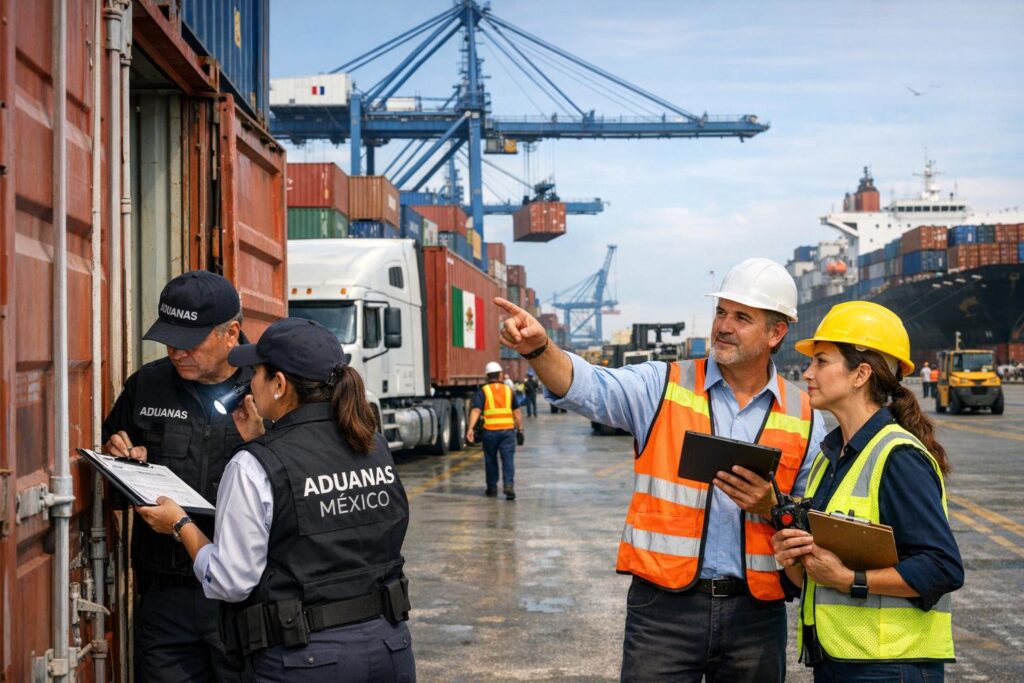
Customs may request a physical inspection. Being prepared with proper documentation, proper packaging, and a clear chain of custody can speed up the process.
Professional brokers often have pre‑clearance agreements that reduce inspection rates and waiting times.
10. Post‑Export Compliance and Record‑Keeping
Mexican law requires exporters to retain all export documentation for at least five years. This includes invoices, contracts, pedimentos, certificates of origin, and transport documents.
- Maintain electronic copies in a secure, searchable archive.
- Conduct periodic internal audits to verify compliance.
- Broker MX offers a cloud‑based document management service to simplify record‑keeping.
Why Partner with Broker MX for Your Mexican Exports?
While the steps above outline the theoretical path, real‑world export operations are riddled with nuances. Broker MX delivers:
- End‑to‑end customs brokerage—from HS code validation to pedimento filing.
- Specialized knowledge of FTAs—maximizing duty savings through accurate certificates of origin.
- Regulatory licensing assistance—fast‑track permits for agricultural, chemical, and high‑tech goods.
- Integrated logistics support—access to vetted freight forwarders, insurance partners, and real‑time tracking.
- Compliance monitoring—automated alerts for document expirations and audit preparation.
Choosing a seasoned partner like Broker MX reduces risk, accelerates time‑to‑market, and ultimately improves your bottom line.
Quick Checklist: Export Documentation Overview
| Document | Purpose | Typical Owner | Key Note |
|---|---|---|---|
| Commercial Invoice | Customs valuation & payment proof | Exporter | Include HS code, Incoterm, and full value. |
| Packing List | Physical verification of cargo | Exporter | Detail weight, dimensions, container numbers. |
| Certificate of Origin | Claim preferential tariffs | Exporter / Chamber of Commerce | Must match HS code and be signed. |
| Export Declaration (Pedimento) | Legal customs filing | Broker / Exporter (via broker) | Submitted electronically via SAT. |
| License / Permit | Authorize export of controlled goods | Regulatory agency (SAGARPA, COFEPRIS, etc.) | Check product‑specific requirements early. |
| Letter of Credit / Documentary Collection | Payment security | Bank (importer’s & exporter’s) | Align terms with commercial invoice. |
Frequently Asked Questions (FAQ)
Do I need a customs broker to export from Mexico?
While it’s not mandatory, using a licensed customs broker like Broker MX dramatically reduces errors in HS classification, documentation, and pedimento filing, helping you avoid costly delays and penalties.
How long does it take to obtain a Certificate of Origin?
Typically 1‑3 business days if all product details are ready. Broker MX can expedite the process by pre‑validating the information and submitting the request directly to the relevant chamber of commerce.
What are the most common reasons for customs holds on Mexican exports?
Common triggers include mismatched HS codes, missing or inaccurate invoices, lack of required permits, and incomplete pedimento data. Professional review by Broker MX catches these issues before filing.
Can I export agricultural products without a SAGARPA permit?
No. All fresh produce, livestock, and certain processed foods require a SAGARPA (now part